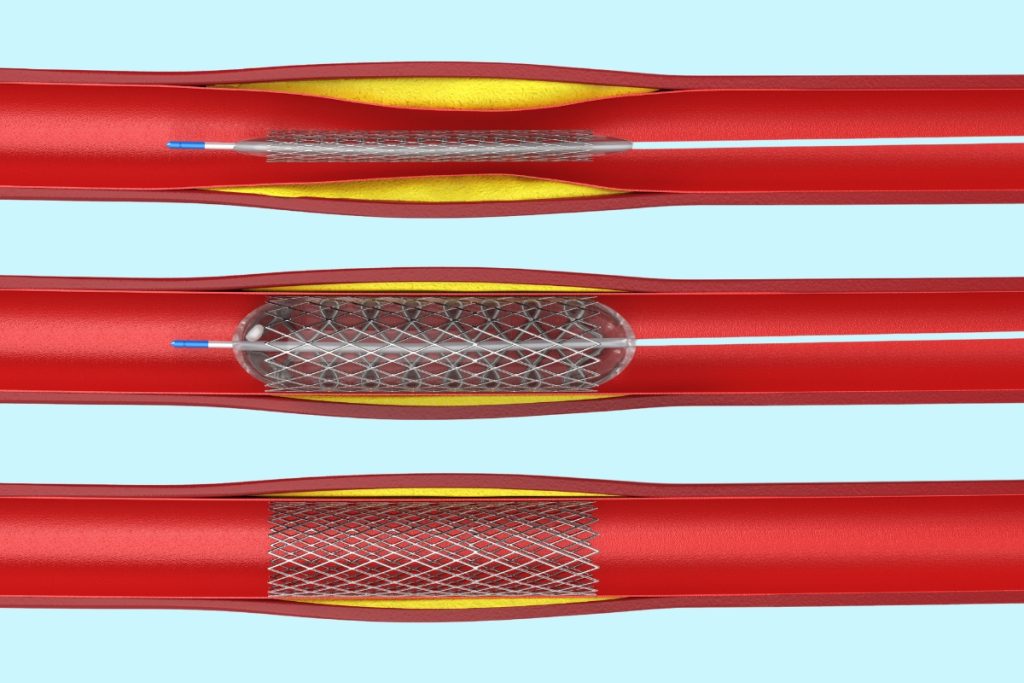
Coronary Angioplasty

Angioplasty

Angioplasty is a medical procedure used to widen narrowed or blocked blood vessels, typically arteries, to restore normal blood flow. This is achieved by inserting a balloon-tipped catheter into the affected vessel and inflating the balloon at the site of the blockage to compress plaque or fatty deposits against the vessel walls, thereby expanding the artery. In many cases, a stent, a small mesh tube, is placed to keep the artery open and prevent re-narrowing. Angioplasty is commonly used to treat conditions such as coronary artery disease, carotid artery disease, and peripheral artery disease.


Here's an overview of the angioplasty procedure

Angioplasty is a minimally invasive technique used to open narrowed or blocked blood vessels, restoring normal blood flow. The procedure starts with the patient receiving a local anesthetic and possibly sedation for comfort. A catheter, a thin and flexible tube, is inserted through a small incision, often in the groin or arm. Using real-time imaging techniques such as fluoroscopy, the catheter is carefully guided to the affected blood vessel. Once in position, a balloon at the tip of the catheter is inflated at the site of the blockage. This inflation compresses plaque or fatty deposits against the vessel walls, widening the artery and improving blood flow. After the balloon is deflated and removed, a stent—a small metal mesh tube—is typically placed in the artery to keep it open and prevent re-narrowing. The procedure concludes with the removal of the catheter and a brief recovery period where the patient is monitored to ensure the artery remains open and functioning properly. Angioplasty helps alleviate symptoms like chest pain or leg pain and enhances overall vascular health with a minimally invasive approach, leading to a quicker recovery and fewer complications.

Uses of Angioplasty

Angioplasty is employed to treat a variety of conditions associated with narrowed or blocked blood vessels. The key uses include:

  1. Coronary Artery Disease (CAD): Angioplasty is used to treat narrowed coronary arteries caused by atherosclerosis. By improving blood flow to the heart muscle, it helps relieve chest pain (angina) and reduce the risk of heart attacks.

  2. Carotid Artery Disease: This procedure is used to address narrowed carotid arteries that supply blood to the brain. It helps reduce the risk of stroke by restoring adequate blood flow to the brain.

  3. Peripheral Artery Disease (PAD): Angioplasty treats blockages in the arteries of the legs and other peripheral areas, improving circulation, reducing pain, and enhancing mobility for individuals with PAD.

  4. Renal Artery Disease: In cases where the renal arteries are narrowed, angioplasty can help restore blood flow to the kidneys, manage hypertension (high blood pressure), and prevent kidney dysfunction.

  5. Treatment of Arteriovenous Malformations (AVMs): Angioplasty can be used to manage AVMs, which are abnormal connections between arteries and veins, potentially reducing symptoms and preventing complications.

  6. Relief from Symptoms: Angioplasty provides relief from symptoms caused by reduced blood flow, such as angina, intermittent claudication (pain while walking), and other discomforts related to arterial blockages.

  7. Prevention of Severe Complications: By restoring normal blood flow and reducing arterial blockages, angioplasty helps prevent severe complications like heart attacks, strokes, and chronic limb ischemia.

Dr. Alok Shah, a renowned cardiologist, excels in diagnosing and treating heart conditions with expertise and compassionate care.

Copyright ©2024 All rights reserved | Designed by Rebecca Digital